Groves — communities with shared roots
A hometown you choose.
Most people have too little share in what grows around them. Poplar helps communities change that: pool capital, lend to one another, put down roots on real land — and own what grows there, together.
Members anywhere. Roots in one place.
The idea
What’s a grove?
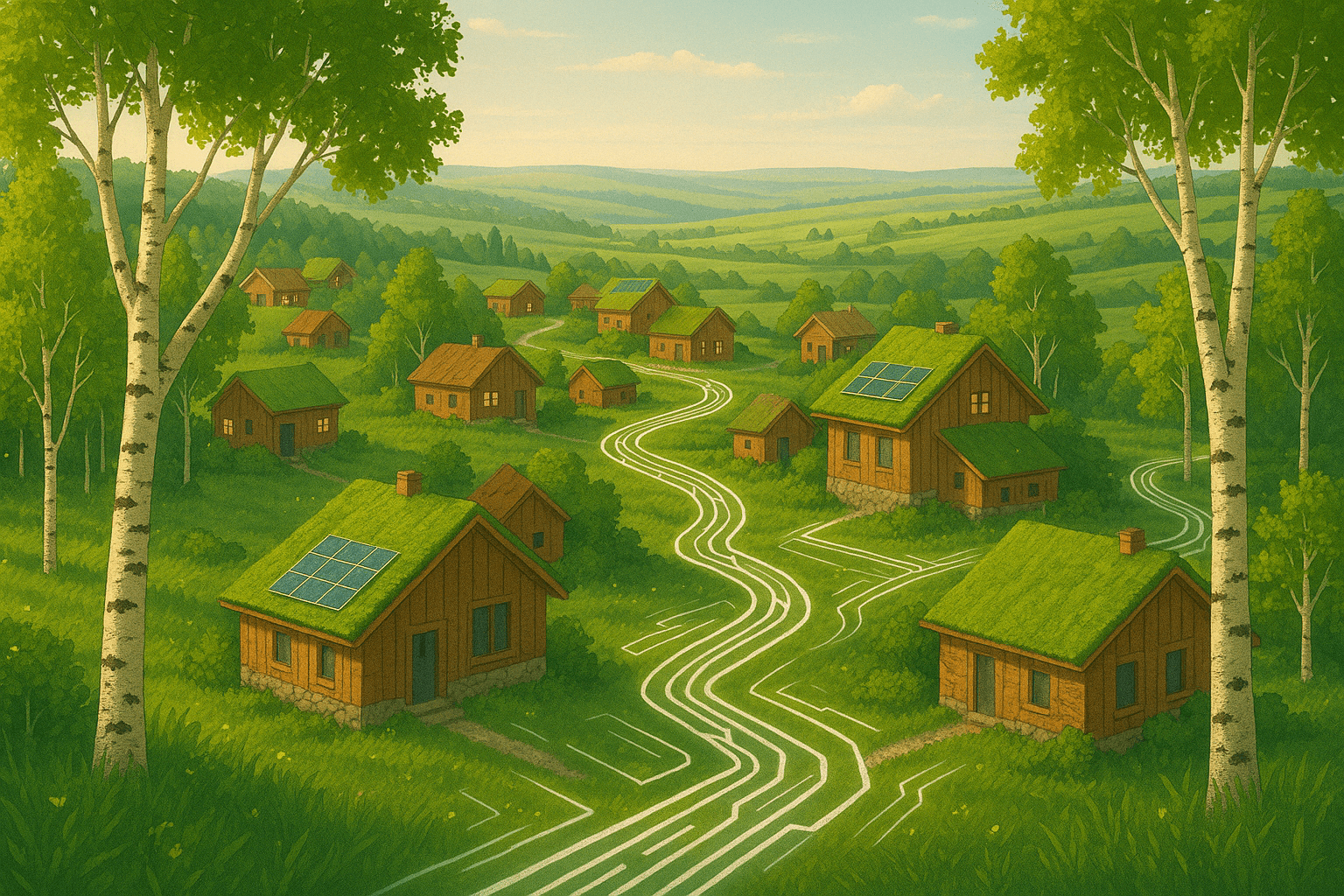
A grove is a community that owns things together: a lending pool that helps members buy homes and start businesses, common ground held in trust, and a real say in how both grow. It’s run by its members — the ones who live there, and the ones who haven’t moved yet.
Real ground
Homes, workshops, gathering places — actual land in one chosen place, with records anyone can verify from anywhere.
A stake in what grows
The lending pool finances members’ homes and businesses; rents and repayments flow back to member-owners. As the grove thrives, so does every stake in it.
Common say
Clear agreements and open books. Every member holds a stake they can see, question, and vote.
When a town thrives today, the upside goes to whoever already owned it. In a grove, it goes to the people who build it.
Below the surface
One root system
Pando, a grove of quaking aspen in Utah, looks like a forest of forty thousand separate trees. It isn’t. Underground, it’s a single organism — one root system, thousands of years old, one of the largest living things on earth.
That’s the design we borrow. A grove’s members can be scattered across the map. What they share sits at the root: common ground, a common pool of capital, and records everyone can trust. Poplars and aspens grow this way. So do we.
How it works
How a grove grows
Pool
Members join from anywhere and pool capital — the way lending circles and building societies always have.
Lend
The pool finances homes, workshops, and small businesses where the grove is taking root. Every loan gathers more ground.
Grow
Rents and repayments flow back to member-owners — from real income, real rents. As the grove thrives, the value of every member’s stake grows with it.
You don’t have to move to belong. But there’s always somewhere to go.
The lineage
None of this is new
We’re rebuilding institutions that worked for centuries — for people who find each other across distance.
Building societies
Neighbors in Birmingham pooled weekly savings in a pub to build one another houses — and dissolved when every member was housed.
Lending circles
Tandas, susus, hui, chit funds: pooled community credit is close to a human universal, still moving billions today among people banks won’t serve.
Community land trusts
Born from the civil rights movement: land held in common to anchor a community, homes owned by the people who live in them.
Groves
The same institutions, rebuilt for communities whose members found each other online — with land records and open books anyone can verify from anywhere.
Where things stand
The path from here

Laying the ground
Land and property records anyone can check and rely on — what lets far-flung members trust shared ground.
The first grove
A real community charters it: a lending pool, and the first homes and businesses where it takes root.
This is where you come in
Roots and branches
Common ground held in trust, member ownership with open books — and the next groves.
The first grove hasn’t been planted yet.
We’re looking for the first communities — groups with real trust and real intent, ready to put down roots together and own what grows. If that’s you, we want to talk.
Plant the first groveNot there yet? Follow the work as it grows.